
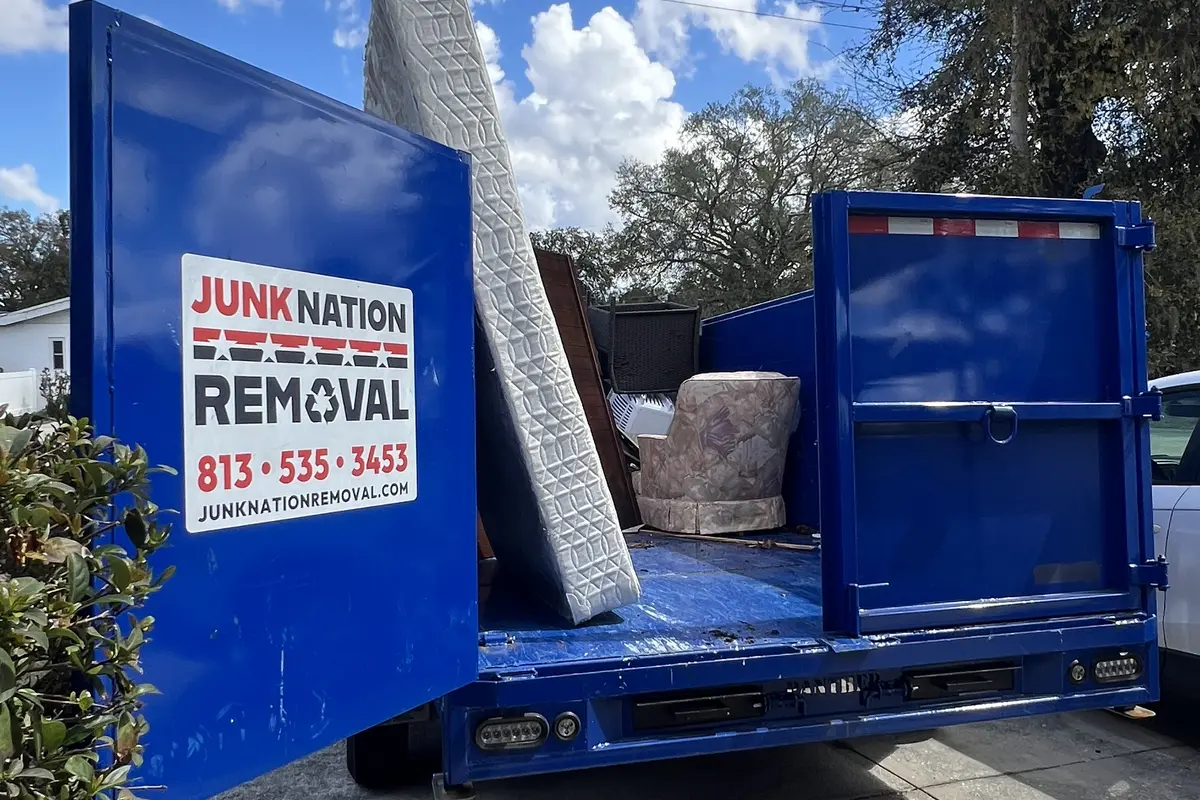
A Clearwater business cleanout guide for offices, retail spaces, warehouses, property managers, and contractors planning commercial junk removal with less disruption.
Match the cleanout plan to the property
An office cleanout is different from a retail reset, warehouse cleanup, or construction debris pickup. Make a quick list of the main item types: desks, chairs, shelving, displays, fixtures, boxes, equipment, or leftover materials.
That list helps Junk Nation estimate truck space, crew size, and removal strategy before the job starts. A Clearwater office near a professional park may need careful hallway and elevator protection, while a retail space closer to a shopping corridor may need faster loading during a narrow window. For warehouses or contractor cleanups, volume and material type matter just as much as the address. The more specific the item list is, the easier it is to avoid delays once the crew is on-site.
Coordinate timing around business operations
Clearwater businesses often need removal done before opening, after closing, between tenants, or around contractor schedules. A clear timing window helps reduce disruption for staff, customers, and neighboring businesses.
If the cleanout needs to happen after hours, say that early so the schedule can be built around your operating needs. Property managers may also need a certificate of insurance on file before work begins, especially in multi-tenant buildings or managed commercial spaces. Junk Nation can work with those requirements so the job does not stall at the loading dock.
Identify heavy or awkward items early
Conference tables, filing cabinets, appliances, metal shelving, and construction debris can affect labor, truck space, and removal strategy. Pointing these out ahead of time makes the estimate more accurate.
Large commercial pieces often need to be broken down, carried through tight routes, or loaded in a specific order so the truck space is used efficiently. Filing cabinets should be emptied before pickup, and sensitive paperwork or electronics should be separated before the crew arrives. If you expect multiple truckloads, the team can plan the work in phases instead of treating it like a single small pickup.
Keep safety and access simple
Designate a loading path, reserve parking when possible, and keep employees out of active work zones. For multi-tenant buildings, confirm dock, elevator, or property manager requirements before the appointment.
Commercial cleanouts move faster when the crew can work without weaving through staff, customers, or active contractors. Mark any doors that should stay closed, point out fragile walls or flooring, and let the team know if alarms, access cards, or freight elevators are involved. A simple access plan keeps the property safer and helps the removal stay on schedule.
Quick cleanout checklist
- List the main categories of items being removed: furniture, shelving, fixtures, boxes, equipment, or debris.
- Confirm whether the job needs before-hours, after-hours, or between-tenant scheduling.
- Ask the property manager whether a certificate of insurance is required.
- Reserve loading dock, elevator, or parking access before the crew arrives.
- Separate sensitive paperwork, computers, drives, or customer records before pickup.
- Empty filing cabinets, desks, and storage furniture when possible.
- Tell the crew about heavy items, debris piles, upstairs spaces, or multi-truck volume in advance.
- Keep staff, customers, and contractors out of active loading paths.
If your Clearwater business needs junk removal for an office cleanout, retail reset, warehouse cleanup, or tenant turnover, Junk Nation Removal can help plan the timing, access, and hauling without making a mess of the workday. Book a commercial cleanout estimate or call (813) 608-3562 to talk through the scope.