
Helping a parent leave a longtime home can feel like several projects at once: preparing a new space, reviewing a lifetime of belongings, managing family opinions, and meeting a deadline. The best downsizing help for seniors begins with a calm plan that keeps the senior involved, protects important belongings, and separates personal decisions from physical removal.
For families in Tampa, St. Petersburg, and Clearwater, condo rules, elevators, parking, and a smaller floor plan may affect the move. A room-by-room sequence keeps the work understandable and the removal crew's role clear: the family chooses what stays, and the crew handles approved items that can leave.
Start With the New Home, Not the Old One
Before sorting the first closet, learn what the destination can hold. Get room measurements, note available storage, and ask about furniture, appliance, and access rules. A favorite table may carry deep meaning but still be too large. Knowing the space turns an emotional question into a practical one: which pieces will make the new home comfortable without crowding it?
Create a simple floor plan and identify the essentials first: a bed, comfortable seating, clothing storage, daily kitchen items, medication supplies, personal records, and meaningful decor. If the move is within a condo or managed community, confirm loading hours, elevator reservations, gate access, and parking before choosing a moving date. Families arranging junk removal in Tampa should share those access details with every company involved.
Agree on Decisions Before Sorting
Before opening cabinets, decide who will help the senior make choices, who will communicate with providers, and where uncertain items will wait. Unless another legal arrangement governs the situation, the senior should remain at the center of decisions about personal belongings.
Use five clearly labeled zones:
- Keep: Items going directly to the new home.
- Family: Belongings a named relative has agreed to receive.
- Donate: Usable items the family wants offered for donation.
- Review: Anything that needs more time or another person's input.
- Remove: Items clearly approved for hauling and proper disposal.
Do not use an unlabeled pile for “maybe.” It quickly becomes a second round of confusion. A limited review zone gives uncertain items a safe place without stopping progress throughout the rest of the home.
Use a Calm Room-by-Room Downsizing Checklist
A good downsizing checklist starts with spaces that carry fewer memories. Early progress builds confidence before the family reaches photographs, heirlooms, and personal papers.
1. Laundry Room, Patio, and Utility Areas
Begin with duplicate cleaning tools, worn outdoor furniture, empty containers, and supplies that will not be needed at the new residence. Check every drawer and shelf before marking anything for removal. Keep hazardous, flammable, or unknown materials separate and ask the appropriate local program how they should be handled rather than placing them in a general removal pile.
2. Kitchen and Dining Area
Choose the cookware, dishes, and small appliances used most often. Confirm whether the destination provides major appliances before deciding about a refrigerator, washer, or dryer. Label family pieces with the recipient's name and a pickup deadline.
3. Closets and Linen Storage
Sort by current fit, comfort, and actual use. Build a compact wardrobe for daily life, then choose a reasonable amount of seasonal and special-occasion clothing. Keep needed linens based on the number of beds and bathrooms in the new home. Bagged clothing can look identical, so label keep, family, and donate bags in large writing.
4. Living Room and Bedrooms
Measure large furniture before promising it to the new space. Photograph the back or underside of each approved removal item if labels may fall off. Empty drawers, cabinets, and pockets completely. Family photographs, jewelry, cash, keys, remotes, and paperwork are often found inside furniture that otherwise appears ready to go.
5. Office, Files, and Keepsakes
Save this area for a day when everyone has enough energy and time. Gather identification, financial records, insurance information, medical paperwork, property documents, military records, photographs, and family history into protected containers. Ask the appropriate professional about retention or destruction requirements for sensitive records. A junk-removal company should not decide what has financial, legal, or historical value.
For inherited-property situations or a home with many unresolved belongings, an estate cleanout checklist for St. Petersburg families can help identify additional planning steps. Junk Nation also offers estate cleanout removal when the approved scope extends beyond a downsizing move.
Protect Keepsakes Without Keeping Everything
The goal is to choose a smaller group of belongings that can still tell a life's story. Families can photograph bulky items, scan selected documents, collect favorite pictures, or create memory boxes. These steps preserve meaning without fitting every object into the new home.
Do not pressure someone because an item appears ordinary. A chipped bowl or old tool may hold a specific memory. Move it to the review zone and return to it later, but set a review date so undecided boxes do not simply move to another garage.
Know Who Handles Each Part of the Transition
Senior downsizing services can mean different things. A move manager or professional organizer may help build the plan, measure the destination, sort possessions, arrange packing, or coordinate the move. A licensed mover transports belongings to the new residence. An appraiser evaluates items when the family needs professional guidance about possible value. Attorneys and financial professionals answer legal, estate, tax, and records questions.
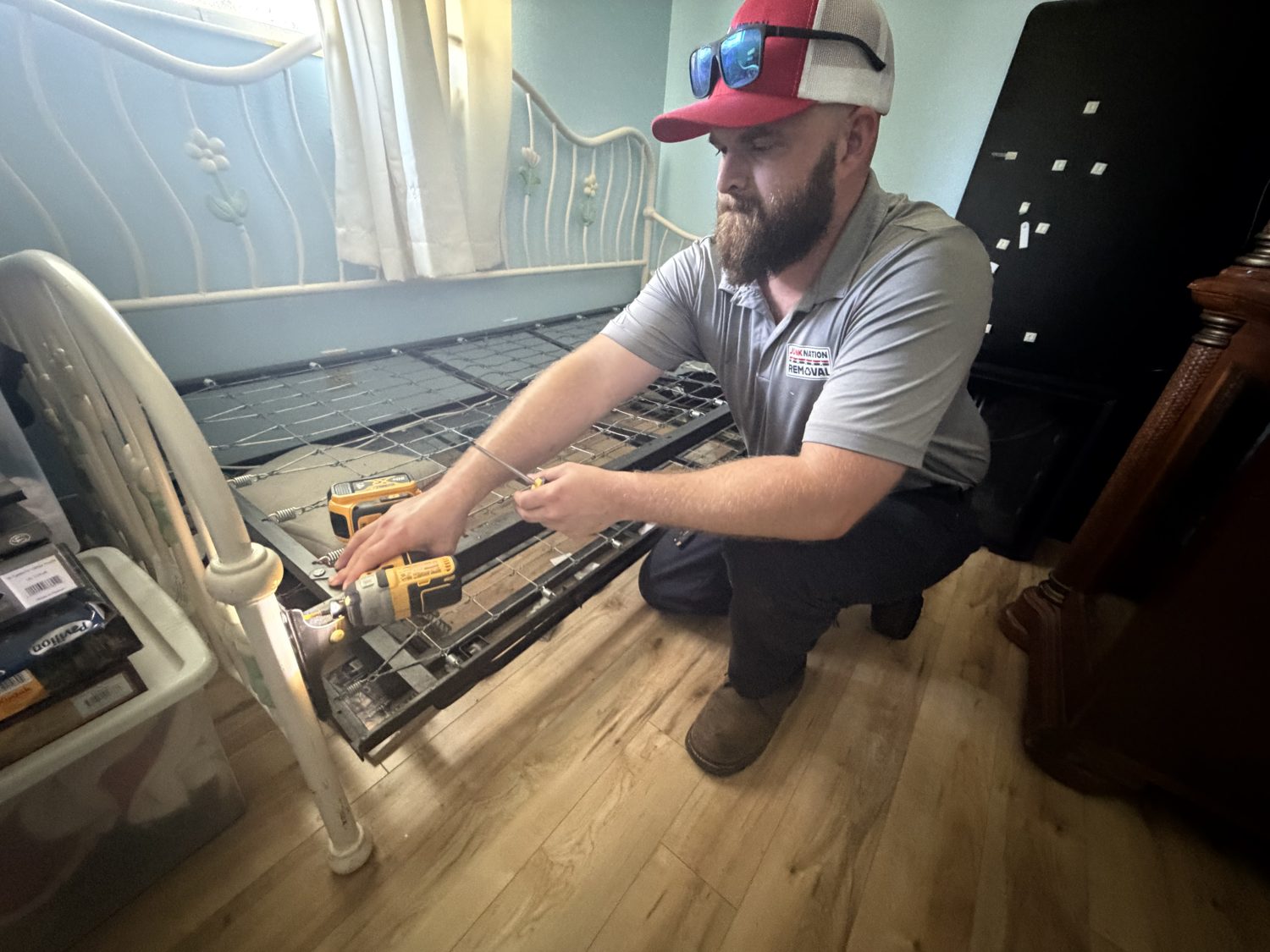
Junk Nation Removal fills a different, focused role. After the family has identified what can leave, the crew provides careful heavy lifting, loading, and hauling. The senior downsizing removal service can address approved furniture, appliances, household items, garage contents, and belongings left after the move. The team sorts for donation, recycling, and proper disposal where practical, but donation or recycling cannot be guaranteed for every item.
This separation protects the family. It prevents a hauling appointment from becoming the moment when major sentimental or financial decisions are made. It also lets organizers, movers, appraisers, and the removal crew do the work each is equipped to handle.
Prepare a Clear Removal-Day Plan
Once decisions are complete, make removal instructions unmistakable with colored tape, printed labels, or a room list. Keep saved items away from carrying paths and designate one family contact to answer questions.
- Confirm parking, gate, concierge, elevator, and loading requirements.
- Point out stairs, narrow halls, long carries, and especially heavy items.
- Arrange safe gas, hardwired electrical, water, or refrigerant-equipment disconnection with the appropriate qualified professional before removal.
- Remove documents, medication, jewelry, cash, keys, and valuables in advance.
- Make sure relatives collect claimed pieces before the removal appointment.
- Keep children, pets, and family members away from active lifting paths.
- Complete a final room, cabinet, closet, attic, patio, and garage check.
For a broader view of available projects, review Junk Nation's residential cleanout services. Families can schedule a free on-site estimate after the removal scope is clear. The team sees the items and access conditions in person before quoting, so the family can decide without pressure.
Move Forward at a Respectful Pace
A successful senior move is not measured by how fast every room becomes empty. It is measured by whether the senior arrives in a comfortable new home with essential belongings, important records, and meaningful keepsakes intact. Build the plan around that outcome. Work in shorter sessions when needed, stop before decision fatigue takes over, and leave emotional rooms until the process feels manageable.
When the keep, family, donate, review, and remove zones are final, Junk Nation Removal can take on the physical work. For responsive scheduling and a free on-site estimate in Tampa Bay, call (813) 608-3562. A clear family plan followed by careful removal can turn an overwhelming transition into a series of calm, achievable steps.
Frequently Asked Questions
When should a family book junk removal during senior downsizing?
Book removal after the senior and family have identified what will move, what relatives will collect, and what is definitely approved to leave. An earlier on-site estimate can help with planning, but important decisions should not be left until loading begins.
Does Junk Nation Removal pack or move belongings to the new home?
No. Junk Nation provides removal and hauling for approved unwanted items. The company does not replace a move manager, packing service, licensed mover, estate appraiser, attorney, or family decision-maker.
What happens to usable items from a senior move cleanout?
The crew sorts for donation, recycling, and proper disposal where practical. Acceptance standards vary, so no specific item can be guaranteed for donation or recycling. Families should separately arrange any donation that must go to a particular organization.
Can senior downsizing in Tampa be completed in stages?
Yes. Many families make better decisions by working one room or category at a time. Keep each stage clearly labeled, confirm the approved removal scope before every appointment, and coordinate access or elevator rules for the property.