
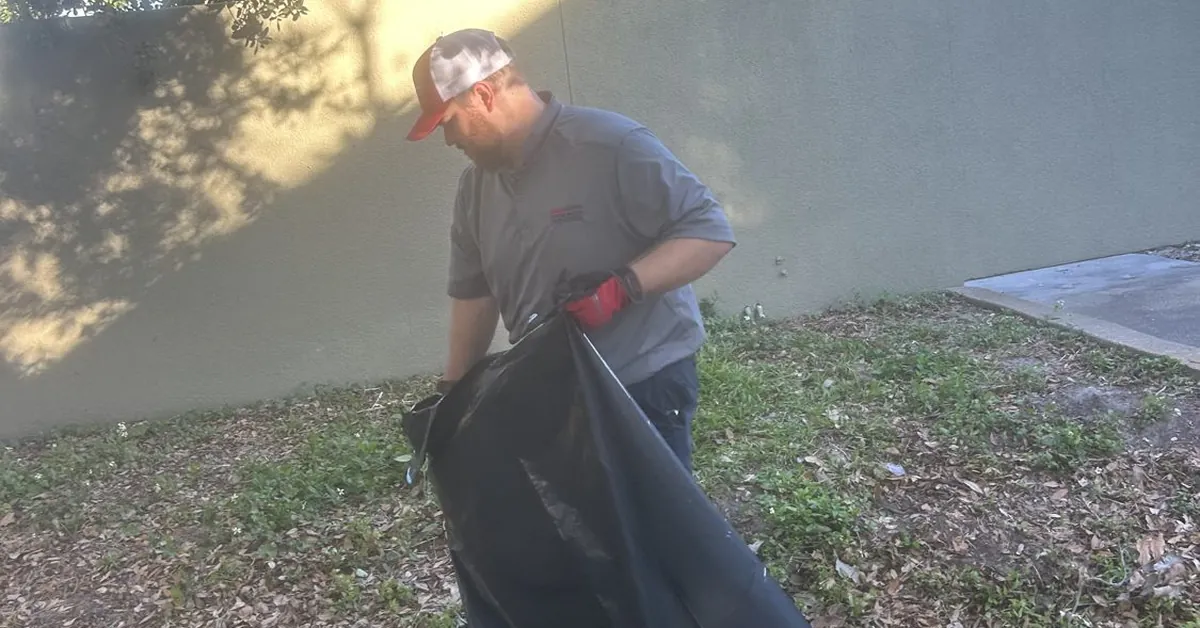
Most Florida fall cleanup is bagging or bundling what fits and hauling away what doesn't. Small leaves, sticks and trimmings can usually go out with your city's yard waste pickup. Large limbs, stacks of palm fronds and overgrown brush often exceed those limits, and that's when hauling it away makes sense.
What does fall yard cleanup look like in Florida?
In colder states, fall cleanup means raking leaves before the first freeze. Florida is different. The growing season never really stops, so the work is less about leaves and more about what the summer left behind: fast-growing shrubs, vines, dead fronds and limbs that came down in afternoon storms.
Timing matters too. Hurricane season runs through the end of November, so October and early November are a good window to clear a yard, but not a time to assume the storm threat is over. Tackling debris now means less material to become a hazard if a late-season system does come through the Tampa Bay area.
What kinds of debris pile up in Tampa Bay yards after summer?
Yards across Tampa Bay tend to have the same handful of problems after a wet summer:
- Palm fronds. Dead fronds hang on until wind and rain bring them down, and a single mature palm can drop a surprising amount at once.
- Storm-loosened limbs. Oaks, pines and other trees shed branches in thunderstorms. Some land in the yard, and some stay lodged in the canopy.
- Overgrowth. Hedges, ficus, bougainvillea and vines can put on feet of growth between June and October.
- Wet, matted leaf litter and small twigs that collect along fences, under shrubs and in beds.
- Old piles. The trimmings from last spring that never got hauled and are now settled into the ground.
Walk the whole property before you start, including side yards and the back fence line. Debris you can't see from the driveway is often where most of it is.
Which debris can you bag or bundle yourself?
A good rule: if you can lift it comfortably and it fits in a bag or a bundle, it is a reasonable DIY job.
Usually fine to handle yourself
- Leaves, grass clippings and small twigs, bagged.
- Hedge and shrub trimmings cut down to short lengths.
- Individual palm fronds, cut into sections and bundled (they are awkward and heavy when wet).
- Branches small enough to cut and tie into manageable bundles.
Usually too big, heavy or risky
- Limbs thicker than your forearm, especially ones still partly attached to the tree.
- Anything hanging over a roof, fence or power line. Leave that to a tree professional, and call your utility if a line is involved.
- Big piles of mixed debris, such as fronds, branches, old fencing and trimmings all together.
- Stumps and root balls.
Some practical cautions if you are doing it yourself. Wear gloves, long sleeves and eye protection. Fronds and brush piles can hide wasps, fire ants and sharp palm spines. Wet debris weighs far more than it looks, so bag in smaller loads than you think you need. And don't stand under a limb you're cutting or work a chainsaw from a ladder.
How do you check your city or county's yard waste rules?
This is the step people skip, and it is where curbside piles go wrong. Yard waste rules in Florida vary by city and county, and sometimes by neighborhood or hauler. What one city picks up weekly, the next may collect only on certain days or not at all.
Before you stack anything at the curb, find out:
- Whether yard waste is collected separately from regular trash.
- Whether it must be bagged, bundled, or placed in a specific container.
- The maximum length, weight and bundle size for branches and fronds.
- Which day it is collected, and how early you can set it out.
- Whether large piles require a scheduled special pickup.
Your city or county solid waste department website is the best source, and a quick phone call to them settles it. If you live in an HOA community, check your association's rules as well, since some have their own requirements for where and when debris can sit.
When is it worth hiring a crew to haul yard debris away?
Hauling makes sense when the debris is more than your pickup schedule can absorb, or more than you can safely move. The common situations:
- Volume. If the pile is bigger than a few weeks of curbside pickup would clear, it will sit in your yard for a month or more.
- Weight and size. Large limbs and wet frond piles are hard on backs, and they are the reason many yard cleanups stall halfway.
- Mixed piles. When branches are mixed with old fence boards, bricks, broken planters or other junk, curbside collection typically won't take it.
- Time. A weekend of cutting, bagging and loading can turn into three.
- HOA or rental deadlines. If you have a compliance notice, a closing date or a property manager waiting, a one-visit haul is simpler.
A typical hauling job starts with describing the pile, or showing the areas that need to be cleared, and getting an estimate. Details differ from company to company, so ask whoever you call how they handle loading and whether anything needs to be bagged or bundled first. Whatever you decide, tell them exactly what is out there, including anything heavy or unusual, so the estimate matches the job.
We offer yard waste removal as part of our junk removal services in the Tampa Bay area. If your pile includes other junk, mention it when you reach out. You can read more on our yard debris removal service page.
If the real problem is a large limb that is still in a tree, or a tree that looks unstable, hire a tree service for that part first. Debris hauling comes after the cutting is done.
How do you keep debris from building up before the next storm?
A little maintenance now saves a big cleanup later:
- Trim dead fronds and low limbs before storms, not after. Dead material is what comes down first.
- Do a short walk-through after any big thunderstorm. Small piles are easy; ignored piles grow.
- Cut back shrubs and vines from fences, roofs and the sides of the house so they are less likely to cause damage or hide debris.
- Keep a bagging routine. Set aside one weekend morning a month in the growing season.
- Don't store loose debris against the house or garage. Piles hold moisture and shelter pests.
If your yard already has more than a weekend's worth of cleanup, or you would simply rather not spend the weekend hauling fronds, you are welcome to get in touch with us for a free estimate. Even if you decide to do it yourself, checking your city's rules first will save you a missed pickup and a pile at the curb.
Frequently Asked Questions
Can I put palm fronds out with regular trash?
Often not. Many Florida cities and counties collect yard waste separately from household trash, and may have rules on bundle length and weight for fronds. Check your local solid waste department before setting them out, since the rules differ by location.
How long can I leave a debris pile in my yard?
There is no single answer, because it depends on your city, county and HOA. Piles can draw code or HOA complaints, hold moisture and shelter pests, and become hazards in strong wind. It is best to clear them promptly, especially before storm season ends in November.
Is yard debris removal different from storm cleanup?
The material is similar, but storm cleanup usually involves larger limbs, mixed debris and sometimes damaged structures or fencing. Regular yard debris is typically trimmings, fronds and brush from normal growth. Tell whoever you hire what is in the pile so the estimate fits the actual job.
Can HOAs require me to clear yard debris?
Many HOAs have landscape and appearance standards in their covenants, and those can include debris on your lot. Read your community's documents or ask the board what applies to you. If you get a notice, a one-time haul can help you meet the deadline.
Do I need to bag or bundle debris before pickup?
For city curbside pickup, usually yes, and many programs have size and weight limits. For a hauling company, the requirements vary, so ask when you book. Keeping the debris together in one accessible spot and pointing out anything heavy generally helps.