
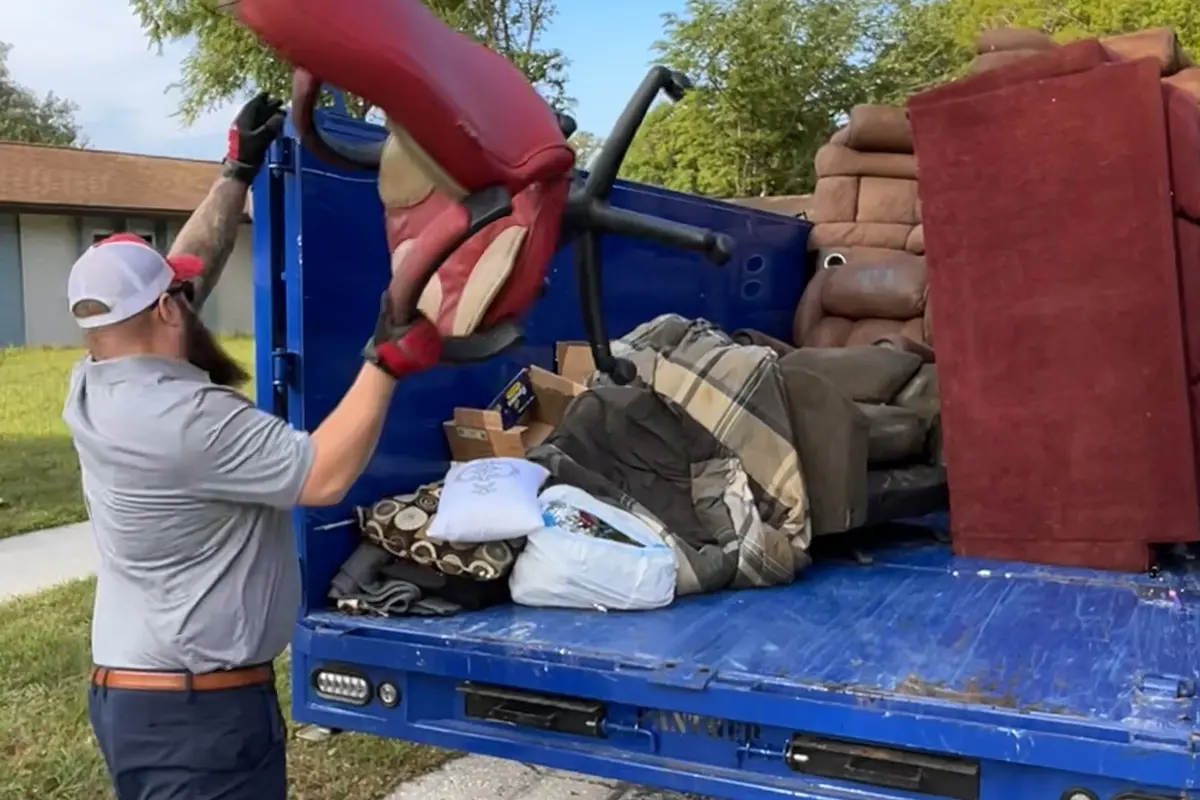
A practical Tampa homeowner guide for sorting items, planning access, and helping your junk removal appointment move faster without making extra work for yourself.
Start with the items that are definitely going
Before the crew arrives, walk the garage, spare room, yard, or storage area and mark the items that should be removed. You do not need to drag heavy furniture, appliances, or boxes to the curb. The goal is simply to make the walkthrough clear so pricing and loading can happen without confusion.
If you have a mix of items, group smaller loose pieces where it is safe to do so and leave the bulky pieces in place. A sticky note, painter's tape, or a quick verbal walkthrough can be enough. Junk Nation's crew will confirm what goes before loading begins, then handle the lifting from wherever the item sits.
Think through access before the truck arrives
Tampa homes can have narrow driveways, alley parking, gated communities, tight stairways, and condo elevators. A Beach Park garage cleanout, a Harbour Island condo pickup, a Channel District high-rise appointment, and a Palmetto Beach property near tighter industrial and residential streets can all require slightly different access planning. If any of that applies, mention it during booking and clear a safe walking path where possible. This helps the crew bring the right equipment and protect the property while moving bulky items.
For condos or townhomes, ask ahead about elevator reservations, loading zones, gate codes, or parking rules. For single-family homes, move vehicles out of the driveway when possible so the truck can park close to the work area. A shorter loading path usually means a cleaner, faster appointment.
Set aside anything that needs a second look
Documents, tools, remotes, keys, sentimental items, and small electronics can hide inside drawers or boxes. Put those aside before pickup starts. If you are unsure whether Junk Nation can take something, leave it visible and ask during the estimate.
This matters most during garage cleanouts, move-out cleanups, and storage-area pickups where useful items get mixed with true junk. Take a few minutes to open drawers, check cabinet tops, and look inside bags before the crew arrives. The team can work quickly, but they will not rush you through a decision that affects something important.
Local disposal matters
A good junk removal plan is not just about getting things off the property. Reusable items, recyclable materials, and disposal-restricted items all need to be handled correctly. Working with a Tampa Bay junk removal company helps keep the process cleaner and more accountable, whether the pickup is in Beach Park, Harbour Island, the Channel District, or Palmetto Beach.
Some items may be better suited for donation, recycling, or special handling, especially appliances, electronics, mattresses, and heavier household goods. Junk Nation will look at the actual load before giving a firm quote, explain what can be taken, and remove the approved items without asking you to stage everything at the street.
Quick cleanout checklist
- Walk each room, garage bay, patio, or shed and mark the items that are definitely going.
- Group loose items into bags or boxes when it is safe, but leave heavy pieces in place.
- Clear a walkway from the removal area to the truck route.
- Move vehicles from the driveway or loading area before the appointment window.
- Set aside documents, keepsakes, keys, remotes, and small electronics before loading starts.
- Tell the crew about upstairs items, condo elevators, gate codes, or oversized furniture early.
- Keep pets and children away from active loading areas.
- Confirm what stays before the first item is loaded.
If you are planning junk removal in Tampa and want the job handled without the back-and-forth, Junk Nation Removal can walk the space, give you a firm quote, and do the heavy lifting from there. Book your Tampa junk removal pickup or call (813) 608-3562 to get on the schedule.