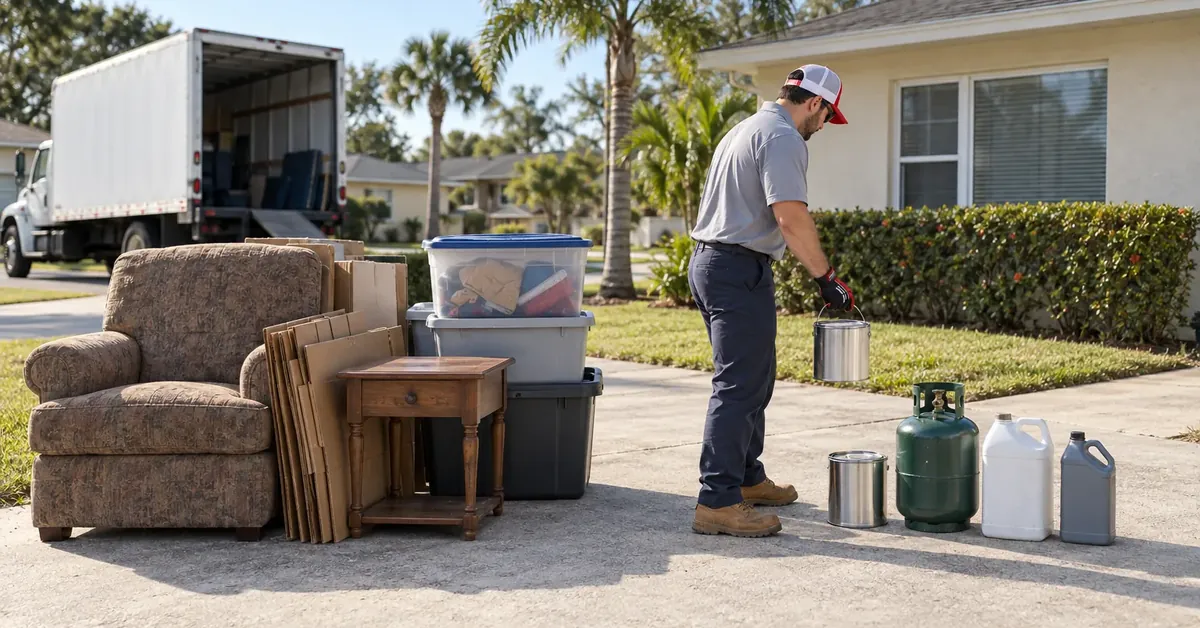
Junk removal crews typically haul furniture, appliances, carpet, mattresses, yard waste, and general household clutter. They usually can't take hazardous materials like paint, solvents, pesticides, propane tanks, asbestos, or medical waste, which need special disposal. Confirm your list with the company before booking.
What does a junk removal crew typically take?
Think of it as many bulky, nonhazardous household items, though each company's policies and local disposal rules still apply. The bulk of what a junk truck carries is the stuff that piles up in garages, spare rooms, and side yards: old couches, mattresses, desks, bookshelves, broken patio furniture, cardboard boxes, scrap wood, and bags of general clutter.
Our own residential junk removal work includes hot tub removal, appliance removal, yard waste removal, and carpet removal. We also do cleanouts, such as home cleanouts, estate cleanouts, senior downsizing, and storage unit cleanouts. In those jobs the pile is usually a mix of furniture, boxes, and household goods, with a few items that need a second look.
Every company sets its own list, so what one crew takes another may not. That is why the checking step later in this post matters.
Which items usually can't go in a junk truck or dumpster?
Across the industry, the items that get turned away fall into a few groups. The common thread is that they can leak, burn, explode, or contaminate a landfill or a transfer station.
- Paint and stains: especially liquid or partly full cans.
- Solvents, pool chemicals, and pesticides: including old chlorine tablets, muriatic acid, and weed killers.
- Fuel and propane: gasoline, oil, kerosene, and propane cylinders from grills or camp stoves.
- Batteries: car batteries and large lithium batteries in particular.
- Asbestos materials: old popcorn ceiling debris, some flooring and pipe wrap in older homes.
- Medical waste: needles, sharps, and biohazard material.
- Fireworks, ammunition, and flares.
Dumpster rental companies have a similar list, and often add tires, large amounts of concrete, and anything wet or liquid. If you are wondering what cannot go in a dumpster, the answer is mostly the same: hazardous, liquid, or specially regulated items.
How should I handle paint, chemicals, propane tanks, and other hazardous items in Florida?
Start with your county. Many Florida counties run a household hazardous waste program or have a drop-off location, and some hold periodic collection events. Hours, limits, and what they accept vary by county, so check your county solid waste department's website or call them. Don't rely on a neighbor's advice from another county.
A few practical tips that apply to most households:
- Keep items in their original containers with labels intact. Mystery containers are the hardest to dispose of.
- Never mix chemicals to consolidate them. Some combinations release toxic gas.
- Latex paint that has dried solid is often treated differently than liquid paint. Rules on this vary, so ask your local solid waste office before putting it in the trash.
- Propane tanks should stay upright and out of a hot car or garage. Florida heat raises pressure inside a tank. Some retailers will exchange or take back cylinders, and your county may also accept them.
- Fuel and oil should go in approved containers. Many auto parts stores accept used motor oil.
If you think a material in an older home contains asbestos, don't disturb it or bag it up yourself. Testing and abatement are generally handled by specialists, and the rules are set by state and federal agencies.
Where do electronics, appliances, and mattresses go after pickup?
These are the gray-area items. Crews can often haul them, but they shouldn't simply be dumped, and where they end up depends on the company.
Electronics
TVs, monitors, computers, and printers contain materials that shouldn't sit in a landfill, and recycling options differ by county. If you want to know where yours will end up, ask the company directly, and check your county's recycling guidance as a backup.
Appliances
Refrigerators, freezers, window AC units, and dehumidifiers contain refrigerant. In many cases, the refrigerant needs to be recovered by a qualified technician before the unit is scrapped or recycled, though how that is handled depends on who is doing the hauling and disposal. Washers, dryers, and stoves don't have that issue and are usually the easy ones. If you have a fridge to move, mention it when you ask for an estimate.
Mattresses
Mattresses and box springs are usually treated as ordinary bulky junk, but in Florida's humidity, a mattress that has gotten wet or moldy can be a problem for some facilities. Tell the company if yours has water damage, bed bugs, or heavy staining so there are no surprises on pickup day.
How do I check with a junk removal company before booking?
The simplest way is to send a list or a few photos and ask directly. A good company will tell you plainly what it can and can't take, rather than leaving you to find out when the truck is already in your driveway.
Questions worth asking:
- Is there anything on my list you can't haul?
- How do you handle appliances with refrigerant?
- Do you take yard waste, and does it need to be bagged or piled?
- What happens if I find something restricted in the pile on the day?
- Will you confirm the price before loading?
Be honest about what is in the pile, even the awkward items. A half-full can of paint tucked behind a shelf is easy to leave out of a description, but it's exactly the kind of thing that causes delays.
How do I sort my pile before the crew arrives?
A few minutes of sorting saves time and can help prevent a partial pickup. A typical pile sorts into three groups.
- Ready to go: furniture, boxes, carpet, mattresses, scrap wood, and general clutter. Group these in one spot, ideally near the garage or curb, with a clear path to the truck.
- Needs a question: appliances with refrigerant, electronics, wet or moldy items, and large amounts of yard debris. Mention them when you book.
- Needs another route: paint, chemicals, fuel, propane, and batteries. Set them aside, keep them away from the heat, and ask your county's household hazardous waste program whether and how they accept each item. For anything medical or possibly asbestos, don't disturb or move it yourself. Confirm handling and acceptance requirements with your county or a qualified specialist first.
In Tampa Bay, it also helps to keep the pile out of standing water and the sun where you can. Rain-soaked cardboard and furniture gets heavy and messy fast, and hurricane season can change what is allowed at the curb, so check with your city for storm-debris pickup rules.
If you aren't sure which pile an item belongs in, ask. You can reach out to us here to book a free estimate and talk through your list before pickup day.
Frequently Asked Questions
Can junk removal take old paint or chemicals?
Usually not. Liquid paint, solvents, pool chemicals, pesticides, and fuel are hazardous, and they are commonly excluded from standard junk pickups for safety and disposal reasons. Confirm with the hauler first, and check your county's household hazardous waste program, since drop-off rules vary by county.
Do they haul appliances with freon, like refrigerators?
Many crews do, but refrigerant often needs to be recovered by a qualified technician before the unit is scrapped or recycled. Mention a fridge, freezer, or AC unit when you ask for an estimate so the company can tell you how it handles them.
Will a crew take yard waste along with household junk?
Often yes, and yard waste removal is part of the junk removal work we list. Tell the company how much there is and whether it is bagged or piled. Large amounts of branches or soil can change the job, so it helps to describe it up front.
Do I need to be home during pickup?
It depends on the company and the job. Being there lets you point out what goes and what stays, which avoids mix-ups. If you can't be home, ask the company in advance how it handles access and confirmation.
What should I do with items a crew can't take?
Set aside paint, chemicals, fuel, and propane, and ask your county solid waste department about household hazardous waste drop-offs or collection events. Keep items in original labeled containers, never mix chemicals, and keep propane tanks and fuel out of the heat. For suspected asbestos or medical waste, don't disturb or move it yourself until you have confirmed handling requirements.